Blog
Mattress Firmness Guide Soft Medium and Firm Compared

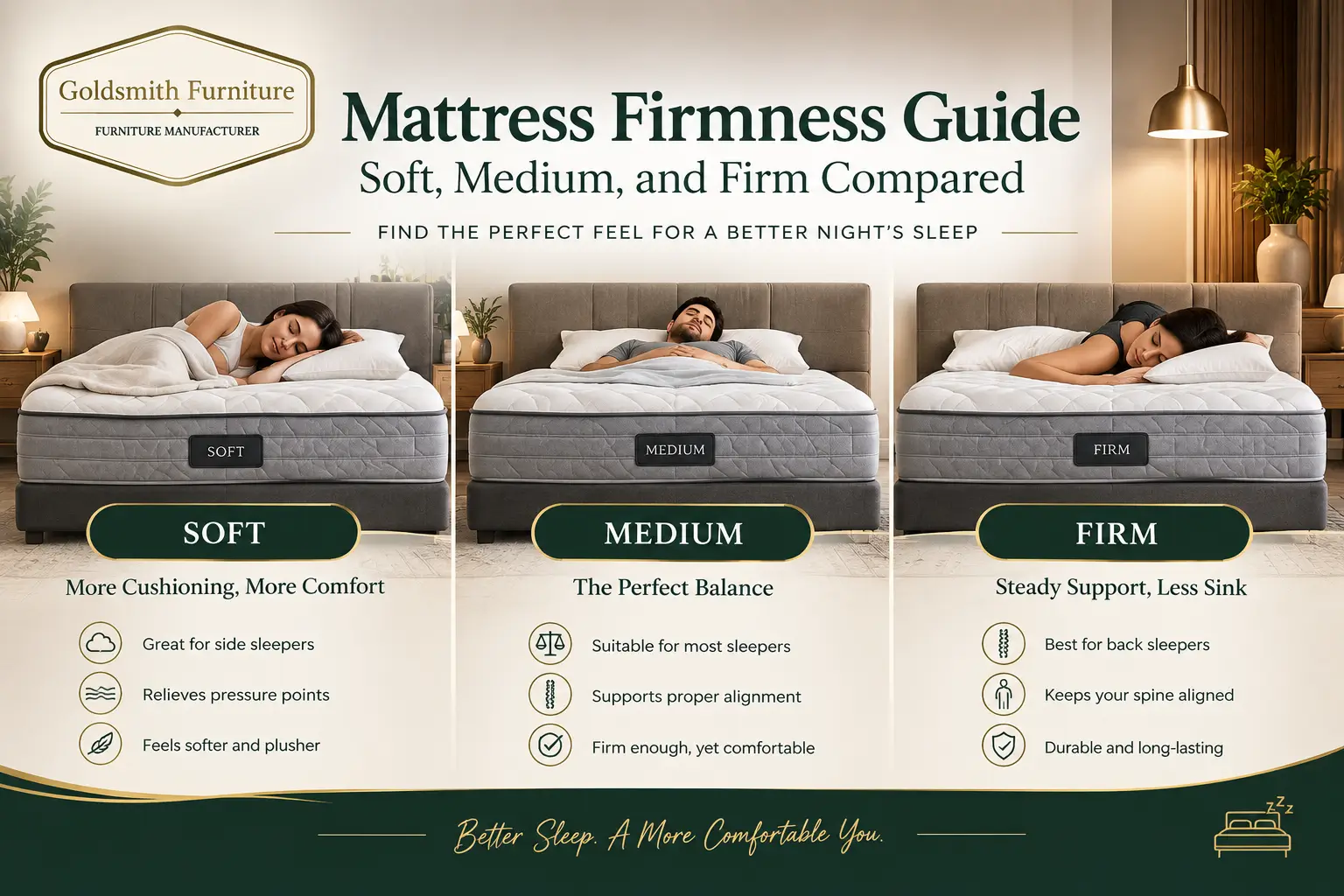
Firmness is the single most confusing part of buying a new mattress, mainly because there is no single UK wide standard for how firmness is labelled. One brand’s medium can feel like another brand’s firm, and terms like H2 or H3 used by some manufacturers add another layer of confusion on top of soft, medium, and firm. This guide explains what firmness actually means, how to judge the right level for how you sleep, and how our own mattress range maps onto that scale using confirmed firmness ratings rather than vague marketing language.
We build and sell mattresses across a genuine firmness range in our Belfast workshop, from softer honey foam designs through to firmer pocket sprung options, so this guide reflects real product knowledge rather than a generic industry overview.
What Mattress Firmness Actually Means
Firmness describes how much a mattress compresses and how much support it gives back when you lie on it, usually rated on a scale from 1 to 10. A lower number means a softer feel with more sinkage into the surface, and a higher number means a firmer feel with less sinkage and a more stable surface underneath.
Firmness is not the same thing as quality. A well built soft mattress and a well built firm mattress can both last the same number of years. Firmness is purely about feel and support, not about how durable or well constructed the mattress is underneath.
The Firmness Scale Explained
| Rating | Category | What It Feels Like |
|---|---|---|
| 1 to 3 | Soft | Noticeable sinkage, close body contouring, plush surface feel |
| 4 to 6 | Medium | Balanced sinkage and support, suits the widest range of sleepers |
| 7 to 8 | Firm | Minimal sinkage, stable surface, less contouring around the body |
| 9 to 10 | Extra Firm | Very little give, mostly chosen for specific medical or support needs |
Choosing Firmness by Sleep Position
Side sleepers generally benefit from a softer to medium mattress, since the extra cushioning allows the shoulder and hip to sink slightly rather than being forced flat, which keeps the spine in a more natural alignment through the night.
Back sleepers tend to do best on a medium to medium firm mattress. This gives enough support to keep the lower back from sinking too deeply, while still allowing some contouring around the natural curve of the spine.
Front sleepers generally need a firmer mattress, since a softer surface allows the hips to sink and can pull the lower back out of alignment over the course of the night. A firmer surface keeps the body more level from shoulders to hips.
Combination sleepers who change position through the night are usually best served by a medium mattress, since it performs reasonably well across all three positions without being poorly suited to any one of them specifically.
Does Body Weight Change the Right Firmness
Yes, and this is a factor many firmness guides underplay. A heavier body compresses the top comfort layer of a mattress more deeply than a lighter body does, which means the same mattress can genuinely feel softer to a heavier person and firmer to a lighter person, even though the firmness rating printed on the label has not changed at all.
As a general rule, if you are notably lighter than average, a mattress rated one level softer than you would otherwise choose often ends up feeling closer to true medium once you are lying on it. If you are notably heavier than average, choosing one level firmer than you might expect usually gives a more accurate medium feel in practice.
Why Firmness Ratings Are Not Fully Standardised in the UK
Unlike some countries where mattress firmness follows a more consistent industry scale, UK manufacturers are free to set their own firmness ratings using whatever internal scale they choose. Some brands rate on a simple soft, medium, firm system. Others use numbered scales from 1 to 10, and some use letter and number codes such as H2 or H3 borrowed from foam density classifications rather than overall feel.
This means a mattress labelled medium by one manufacturer is not guaranteed to feel the same as a medium from a different manufacturer. The safest approach is to compare mattresses within the same range or the same maker, where the firmness scale is at least applied consistently, rather than assuming a number or label carries the same meaning across different brands entirely.
How Materials Affect Firmness
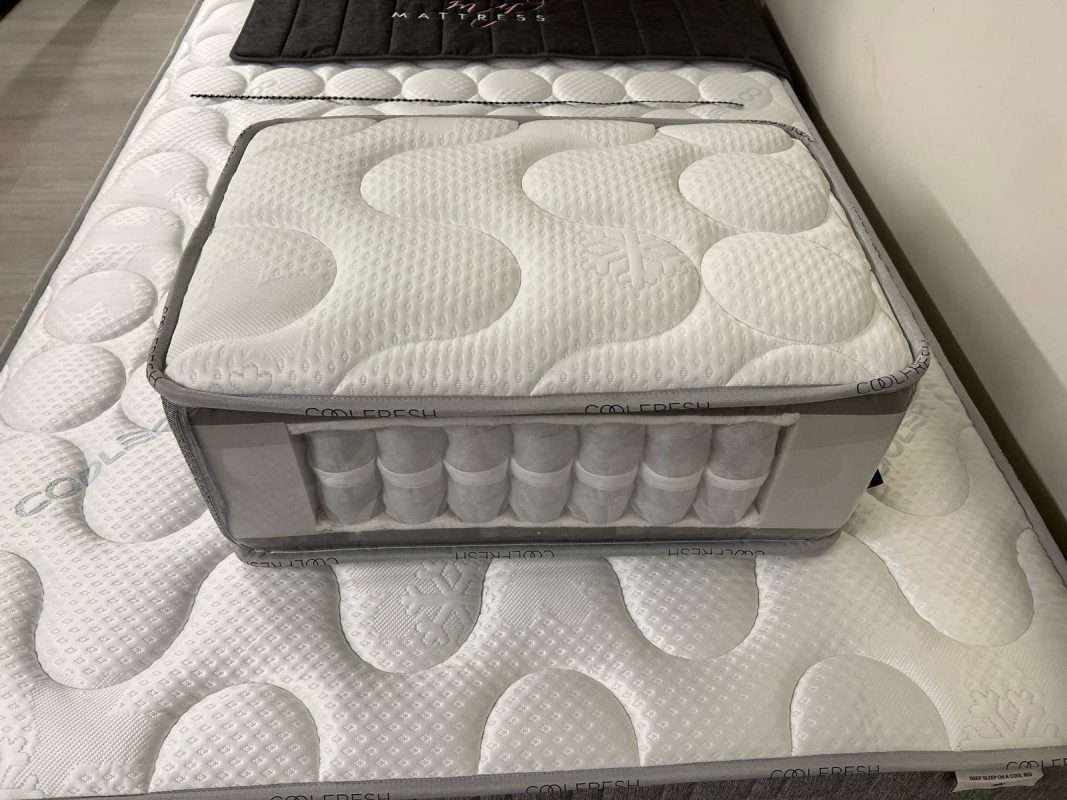
The construction underneath the surface layer has as much influence on firmness as the top comfort layer itself. A pocket sprung mattress with individually wrapped springs, such as our Cool Fresh Spinal design with 2000 nested springs, gives strong edge to edge support and a firmer overall response, since each spring compresses independently under weight rather than the whole surface flexing together.
A mattress built with a thicker memory foam or reflex foam top layer tends to feel softer initially, since foam compresses more readily than springs, though the support layer underneath still determines how much the mattress settles over time. Understanding which layer is doing the work, whether that is springs, foam, or a combination of both, helps explain why two mattresses with the same firmness number can still feel noticeably different in practice.
Our Mattress Range Mapped to Firmness
Rather than leaving firmness as an abstract concept, here is how our own current range maps onto the scale, using the actual firmness ratings we build to rather than a generic description.
Goldsmith Furniture Mattress Firmness Ratings
| Mattress | Firmness Rating | Starting Price |
|---|---|---|
| HoneyB Honey Mattress | 8.5 out of 10 | From £185 |
| Cool Fresh Spinal Mattress | 9 out of 10 | Contact for pricing |
| HoneyB Balmoral Mattress | Medium to firm | From £350 |
| HoneyB Bamboo Mattress | Medium | From £185 |
If you are after a firmer, more supportive feel, particularly if you sleep on your front or carry more weight, the Cool Fresh Spinal and HoneyB Honey mattresses sit at the firmer end of our range. If you prefer a softer, more cushioned feel, the HoneyB Bamboo sits closer to a true medium, giving balanced support without feeling overly firm underneath.
The HoneyB Balmoral sits between the two, offering a medium to firm feel that works well for back sleepers or couples who want a middle ground without committing to either end of the scale. Comparing these four side by side, rather than relying on marketing terms alone, gives a much clearer picture of which one actually suits how you sleep.
Frequently Asked Questions
What firmness is best for back pain
Medium to medium firm mattresses, generally in the 5 to 7 range, tend to work best for most people with back pain, since they support the spine without allowing the hips to sink too deeply. Individual results vary depending on the specific cause of the pain, so this is general guidance rather than medical advice.
Is a firmer mattress always more durable than a softer one
Not necessarily. Durability depends on the quality of the materials and construction, not the firmness rating itself. A well built soft mattress can outlast a poorly built firm one.
Can firmness change over time as a mattress ages
Yes. Comfort layers in most mattresses soften gradually with years of use, so a mattress that felt medium firm when new may feel noticeably softer after several years, even without any visible damage.
Should couples with different firmness preferences buy one mattress or two
A medium mattress is the most common compromise for couples with different preferences, since it performs reasonably well for both softer and firmer preferences without being poorly matched to either. Some manufacturers also offer dual firmness options split down the middle of the mattress, though this adds cost.
How long does it take to adjust to a new mattress firmness
Most people need between two and four weeks to properly adjust to a new mattress, particularly if the new firmness is noticeably different from what they were sleeping on before. It is normal for a new mattress to feel slightly unfamiliar during this settling in period.