Blog
The Kids Bed Range Choosing a Bed That Grows With Your Child

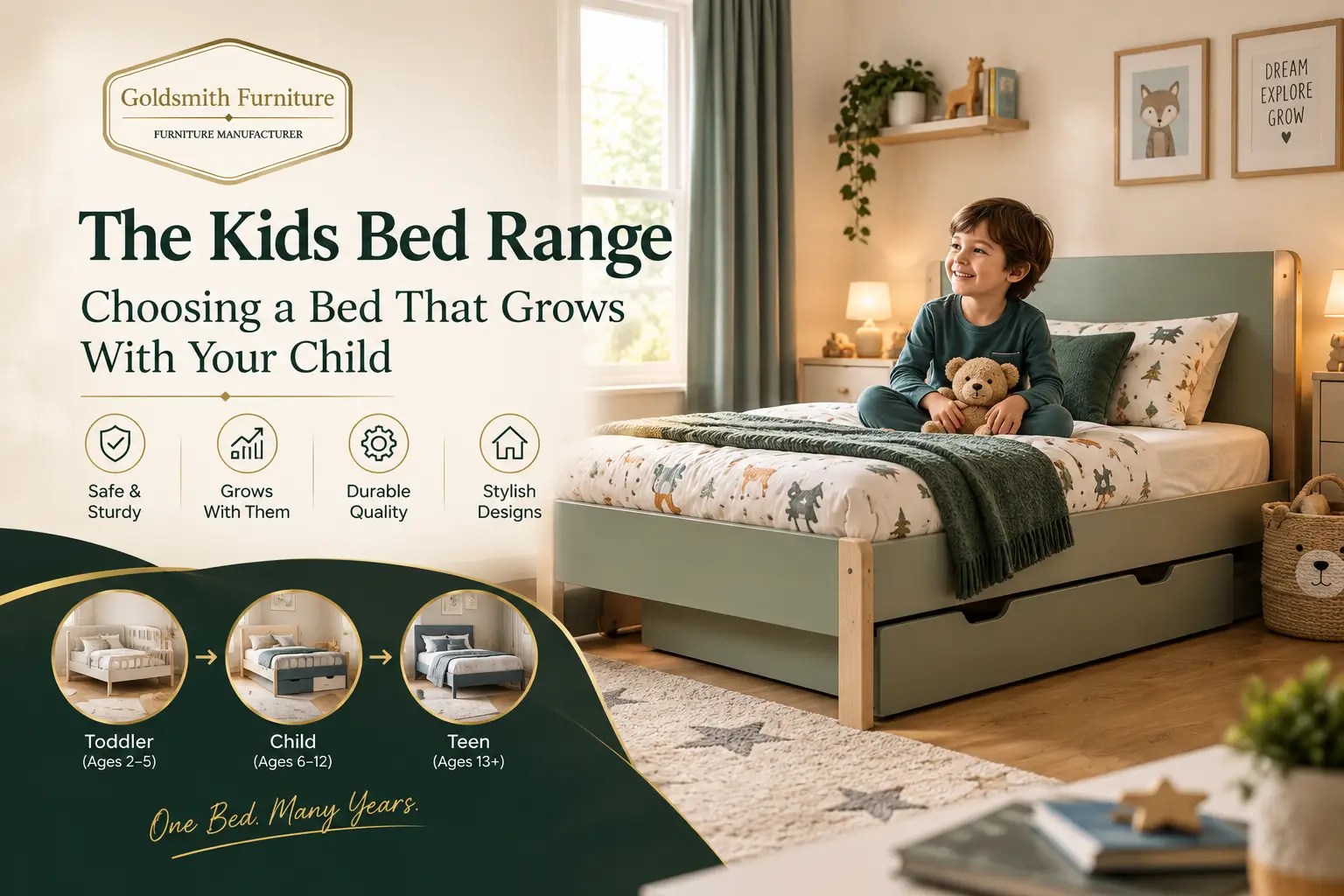
Buying a bed for a child is different from buying one for an adult, mainly because the right answer changes every few years as they grow. Get the size and style right at each stage and a single well built bed can genuinely last from early childhood right through to the teenage years. Get it wrong, and you end up replacing a bed far sooner than you needed to, often because the frame itself was not built to handle years of daily use in the first place.
We build our kids bed range in the same Belfast workshop as our adult bed frames, to the same construction standard, which is why this guide focuses as much on what is underneath the bed as it does on size and style.
Kids Bed Sizes by Age
Bed size for a child should be chosen based on how long you want the bed to last, not just their current height. A bed bought with only the next year or two in mind usually needs replacing sooner than one chosen with a few years of growth in mind.
UK Kids Bed Size Guide
| Bed Size | Typical Age | Notes |
|---|---|---|
| Toddler Bed | 18 months to 4 years | Lower to the ground, often with side rails to prevent rolling out |
| Single Bed | 4 years and up | The most versatile size, often lasting well into the teenage years |
| Small Double | Pre teens and older | Extra width for growing bodies and more comfortable sleep |
| Double Bed | Teenagers | Suited to larger bedrooms, often doubles as a guest bed later |
A single bed is genuinely the size that earns its price back most reliably, since it comfortably suits a child from around four years old right through most of their teenage years, unlike a toddler bed which is typically outgrown within two to three years.
Why Build Quality Matters More With Kids Beds Than Adult Beds
A children’s bed takes a different kind of daily wear than an adult bed. It gets jumped on, climbed over, and used as a base for forts and games far more than a typical adult bed ever does. This means the frame underneath needs to handle repeated stress that a lighter or weaker construction was never designed for.
We build our kids bed frames around a solid timber frame rather than a lightweight composite structure, for exactly this reason. A frame built to handle years of genuinely rough daily use costs a little more upfront but avoids the far more common problem of a cheaper kids bed developing a wobble or a creak within the first year or two of ownership.
Signs a Kids Bed Frame Will Not Last
A few warning signs are worth checking for before buying, particularly with lower cost frames sold mainly on price. Joints held together with only glue and small pins rather than proper screwed or bolted connections tend to loosen within the first year of active use. A frame that flexes or creaks noticeably when you press down on one corner in a showroom will usually get worse, not better, once it is at home facing daily jumping and climbing.
Side rails and slats are another area worth checking closely. Thin, widely spaced slats can sag or even crack under the combined weight of a child bouncing on the mattress, particularly as they grow heavier through the school years. A properly built frame uses slats close enough together, and thick enough, to support that kind of active use without flexing noticeably.
Safety Standards Worth Checking
UK children’s furniture is covered by specific safety standards that are worth checking before you buy, regardless of which retailer you choose. Toddler beds and similar low level furniture generally fall under BS 8509 for stability and construction safety, while any painted or finished surface should meet EN71-3 for toxic element safety in finishes.
These standards exist because children’s furniture faces genuinely different risk factors than adult furniture, from small parts to structural stability during active play. A reputable manufacturer should be able to confirm compliance clearly rather than leaving you to search for it, and it is a reasonable question to ask directly if it is not stated on the product page.
Choosing a Style That Lasts
Beyond size and safety, style choice affects how long a bed stays appropriate for a child’s changing tastes. A simple, well proportioned frame in a neutral fabric or finish tends to suit a room through several years of changing preferences far better than a heavily themed design a child may outgrow their interest in within a year or two, even though the bed itself still has years of useful life left.
Storage built into the base is worth considering earlier than most parents expect. Children’s rooms fill up with toys, books, and clothing quickly, and a bed with drawers or lift up storage underneath can meaningfully reduce the need for separate storage furniture in a smaller bedroom.
Transitioning Between Bed Stages Smoothly
The move from a toddler bed to a single bed is usually the biggest transition, both physically and emotionally for a young child. Involving your child in choosing the new bed, even in a small way such as picking the fabric colour, tends to make the transition go more smoothly than simply replacing the bed without any input from them.
The move from a single to a small double or double later on is generally more straightforward, since it is driven by physical size rather than a developmental milestone. This transition can usually happen whenever it makes practical sense for the room and the budget, rather than needing to align with a particular age.
Matching the Right Mattress to a Kids Bed
The mattress matters just as much as the frame, though it gets far less attention in most buying decisions. A mattress that is too firm can be uncomfortable for a lighter child, while one that is too soft may not provide the support a growing spine needs. Many kids mattresses are built to a slightly firmer specification than adult equivalents for exactly this reason, prioritising support over the plush feel some adults prefer.
It is also worth checking that the mattress depth matches what the bed frame was designed for. A frame with side rails set for a shallower mattress will look and function poorly with a much deeper one, and the reverse is also true, where a shallow mattress in a frame built for a deeper one can leave an unattractive gap around the edges.
Frequently Asked Questions
What size bed should I buy for a 5 year old
A single bed is generally the right choice from around 4 years old, since it offers enough room to last through much of childhood rather than needing another upgrade within a year or two, as a toddler bed typically would.
How do I know if a kids bed frame is well built
Check whether the frame is described as solid timber construction rather than a lighter composite material, and look for any visible wobble or flex when testing the frame in a showroom. A well built frame should feel solid and stable with no noticeable movement when pressed firmly at the corners.
Do kids beds need to meet specific safety standards
Yes. UK children’s furniture is generally expected to meet relevant safety standards covering stability and construction, such as BS 8509 for toddler furniture, along with EN71-3 for the safety of painted or finished surfaces. Ask your retailer directly if this is not clearly stated.
Is it worth buying a bed with storage for a child’s room
Often yes, particularly in a smaller bedroom. Built in storage under the bed reduces the need for separate wardrobes or storage units, which matters more in a child’s room than an adult’s given how quickly toys, books, and clothing accumulate.
Should I choose a themed or a plain bed design for my child
A simpler, more neutral design tends to remain appropriate for longer, since children’s interests and preferences change faster than the useful life of a well built bed frame. A heavily themed design may need replacing for aesthetic reasons well before it is actually worn out.
Choosing the Right Kids Bed
Focus on genuine build quality first, since this determines how many years of rough daily use the bed can actually handle. Choose a size with a few years of growth in mind rather than only the next year or two, and check safety standard compliance directly if it is not clearly stated on the product itself.
A well chosen kids bed, built properly and sized with some room to grow, should comfortably see a child through several years without needing replacement. That combination of the right size, genuine build quality, and a style that will not feel outgrown within a year, is a far better basis for the decision than price alone.