

Blog
Wingback vs Chesterfield Comparing Northern Ireland’s Two Most Popular Bed Styles

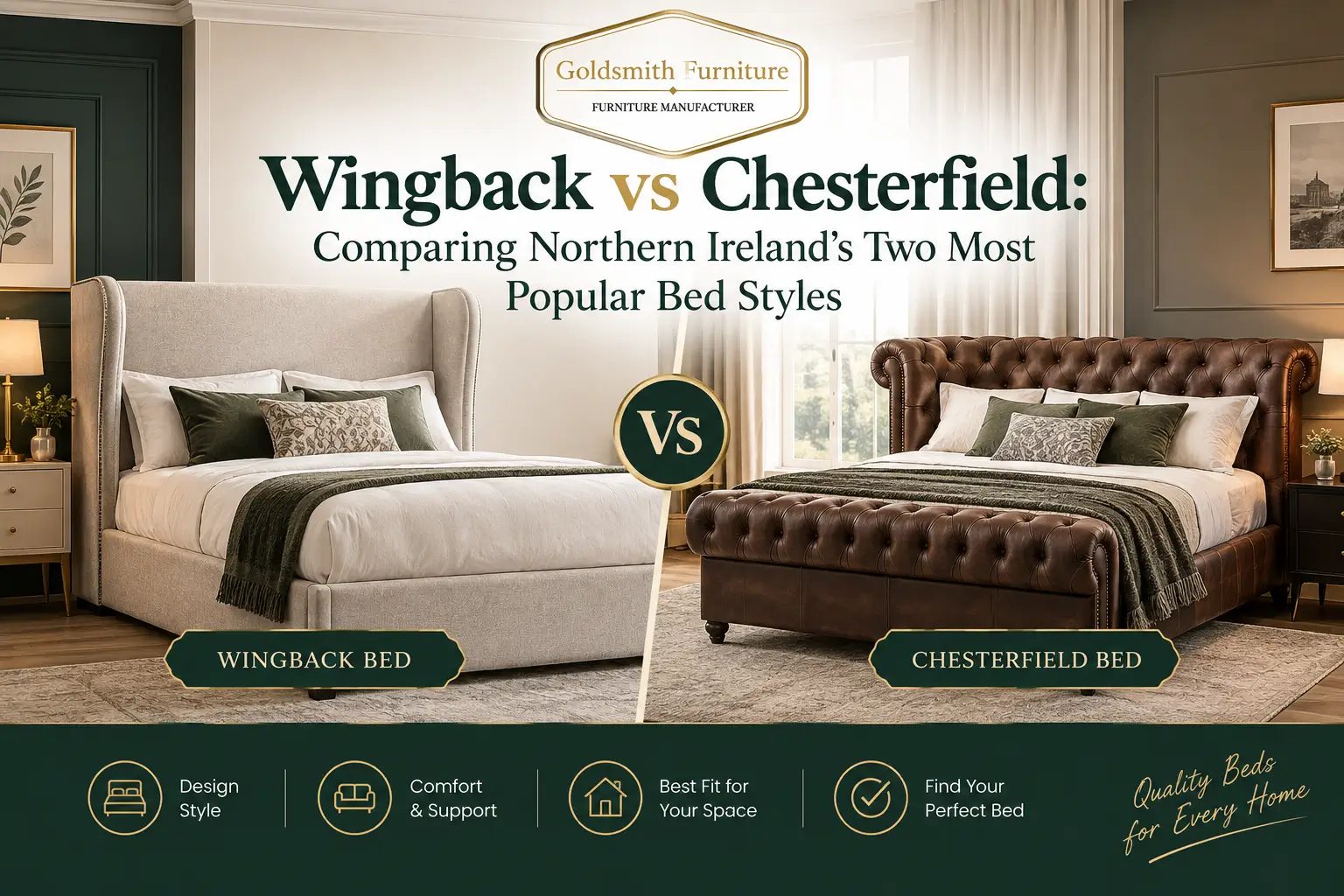
Wingback and Chesterfield are the two upholstered bed styles we get asked about most often in our Belfast workshop, and they are frequently confused with each other since both are upholstered, both suit a traditional or classic bedroom, and both can be finished in the same fabric ranges. They are built quite differently underneath, though, and that difference affects how each one looks, how it feels to sit against, and how long it holds its shape.
We build both styles ourselves rather than buying them in from a supplier, so the comparison below covers the actual construction differences as well as the look, not just which one photographs better.
What Makes a Bed Wingback
A wingback bed is defined by the tall side wings that extend out from the headboard, framing the top of the bed on both sides. The style originated centuries ago as a practical design meant to shield a sleeper from cold drafts in a draughty room, and that enclosed, cocoon like feel is still the main reason people choose it today, particularly in bedrooms with high ceilings or large windows where a flat headboard can feel exposed by comparison.
The wings themselves need a solid internal frame to hold their shape over time. A wing built around a thin foam core will soften and lose its upright profile within a couple of years, while a wing built around a proper timber frame with a firmer foam wrap keeps its structure for the life of the bed.
What Makes a Bed Chesterfield
A Chesterfield bed is defined by deep button tufting, buttons pulled tight into the fabric to create a diamond or square quilted pattern across the headboard. The style comes from the same upholstery tradition as the Chesterfield sofa, and it reads as a more deliberate statement piece than a plain upholstered headboard, since the tufting itself is the entire visual focus.
The durability of a Chesterfield headboard comes down to how the buttons are secured. Buttons that are simply glued or lightly stitched will work loose within a few years of regular use, while buttons anchored properly through the frame with a secure thread and backing stay tight for the long term. This is genuinely the single biggest quality difference between a well built Chesterfield bed and a cheaper one, and it is very difficult to judge just by looking at a product photo.
Wingback and Chesterfield Compared
Style and Construction Comparison
| Feature | Wingback | Chesterfield |
|---|---|---|
| Defining Feature | Tall side wings framing the headboard | Deep button tufting in a diamond or square pattern |
| Overall Feel | Enclosed, cocoon like, traditional | Formal, tailored, statement piece |
| Key Quality Factor | Timber frame inside the wings | How securely the buttons are anchored |
| Best Suited To | Larger rooms, high ceilings, period homes | Any room where the headboard is the focal point |
| Typical Starting Price | From £250 | From £250 |
Starting prices are similar between the two styles, since the fabric and base construction costs are broadly the same. Where the price rises is with size and finishing detail, such as our larger Madrid XL wingback frame or the fully upholstered Milan Chesterfield range, both of which start from £450 given the extra material and labour involved.
Which Style Suits Which Room
Wingback tends to suit larger bedrooms and period properties particularly well. The tall profile of the wings needs some visual room to work, and it pairs naturally with the higher ceilings and larger proportions common in older Belfast terraces and similar period housing. In a smaller, more modern bedroom, a wingback can occasionally feel oversized relative to the rest of the room.
Chesterfield works well in almost any bedroom size, since the tufting is a surface detail rather than a change in overall headboard shape or height. It suits both traditional and more contemporary interiors, and it tends to be the style people choose when they want the bed itself to be the clear focal point of the room.
Comfort Against the Headboard
The two styles feel noticeably different if you tend to sit up against the headboard to read or watch television. A wingback headboard, particularly one with a generous foam wrap, gives a soft, enclosed surface to lean back into, and the wings themselves can support your shoulders and arms if you sit slightly turned to one side.
A Chesterfield headboard feels firmer against the back because the button tufting pulls the fabric tight against the frame at regular intervals. Many people find this more supportive for sitting upright, while others find the wingback’s softer, less structured surface more comfortable for longer periods of reading or resting against the headboard.
How Each Style Is Actually Built
The frame underneath a wingback determines almost everything about how well it performs over time. We build the wing sections around a solid timber core rather than a folded cardboard or thin plywood insert, which is a shortcut some cheaper imported frames use to reduce cost. A timber core keeps the wing rigid and upright for the full life of the bed, while a weaker core will start to lean or soften within a couple of years of regular use.
A Chesterfield headboard is built by first upholstering the panel in fabric, then pulling each button through pre marked points and securing it from behind with a strong thread anchored to the frame itself, not just to the foam or wadding layer. This is a slower, more labour intensive process than simply gluing buttons to the surface, but it is the only method that keeps the tufting pattern tight and even after years of contact and cleaning.
Fabric and Colour Considerations
Tufting on a Chesterfield bed shows texture and light differently depending on fabric choice. Velvet holds the diamond pattern with strong shadow definition, giving a rich, formal look, while a linen or woven fabric softens the pattern into a more relaxed, textured finish. Darker colours tend to show the tufting pattern most clearly, since the shadow lines between buttons are more visible against a deeper tone.
Wingback headboards generally read as calmer overall, since there is no repeating pattern across the surface, which means the fabric choice matters more for the room’s colour scheme than for how the structural detail of the bed itself reads.
Frequently Asked Questions
Which lasts longer, a wingback or a Chesterfield bed
Both can last well over a decade when built properly. A wingback depends on a solid timber frame inside the wings to hold its shape, while a Chesterfield depends on how securely the buttons are anchored through the frame rather than simply glued to the surface.
Is a Chesterfield bed more expensive than a wingback bed
Starting prices are similar between the two styles. Price differences come mainly from size and finishing detail rather than the style itself, since both require a comparable amount of fabric and frame construction at the same size.
Can you get a bed that combines wingback and Chesterfield styling
Yes, some designs combine tall wings with button tufting across the headboard, giving both the enclosed profile of a wingback and the tufted detail of a Chesterfield in one frame.
Does a wingback bed suit a small bedroom
A wingback can work in a smaller room, but the tall wing profile is more visually demanding of space than a flat or lightly tufted headboard. In a genuinely compact bedroom, a Chesterfield or plain panel style often suits the proportions better.
How do I know if button tufting is well made before buying
Look for buttons that sit flush and tight against the fabric with no visible slack around the base. If possible, ask how the buttons are anchored, since a bed with buttons secured through the frame with proper backing will hold its shape far longer than one where the buttons are only glued to the surface.
Which style is more comfortable to sit against
This comes down to personal preference. A wingback tends to feel softer and more enclosed, which many people find more comfortable for extended reading or relaxing against the headboard. A Chesterfield feels firmer due to the button tufting pulling the fabric tight, which some people prefer for sitting upright.
Do wingback beds need more maintenance than Chesterfield beds
Not significantly, provided both are built well. A wingback with a solid timber core inside the wings needs little attention beyond normal fabric care. A Chesterfield needs the button anchoring checked occasionally over many years of heavy use, though a properly secured tufting job should not require intervention for a long time.
Choosing Between the Two
If you have a larger bedroom, particularly in an older property with generous proportions, and you want a traditional, enclosed feel around the top of the bed, a wingback is usually the right choice. If you want the bed itself to be a clear design statement regardless of room size, and you are comfortable checking the quality of the tufting construction before you buy, a Chesterfield is generally the better fit.
Neither style is objectively better than the other. The right choice depends on your room proportions, how you use the bed day to day, and which visual statement you want the headboard to make in the space.
You can browse our full wingback range including the Madrid and Oxford styles, or see our Chesterfield Bed Range directly. If you are not sure which will suit your bedroom, get in touch and we will talk you through both in more detail.
